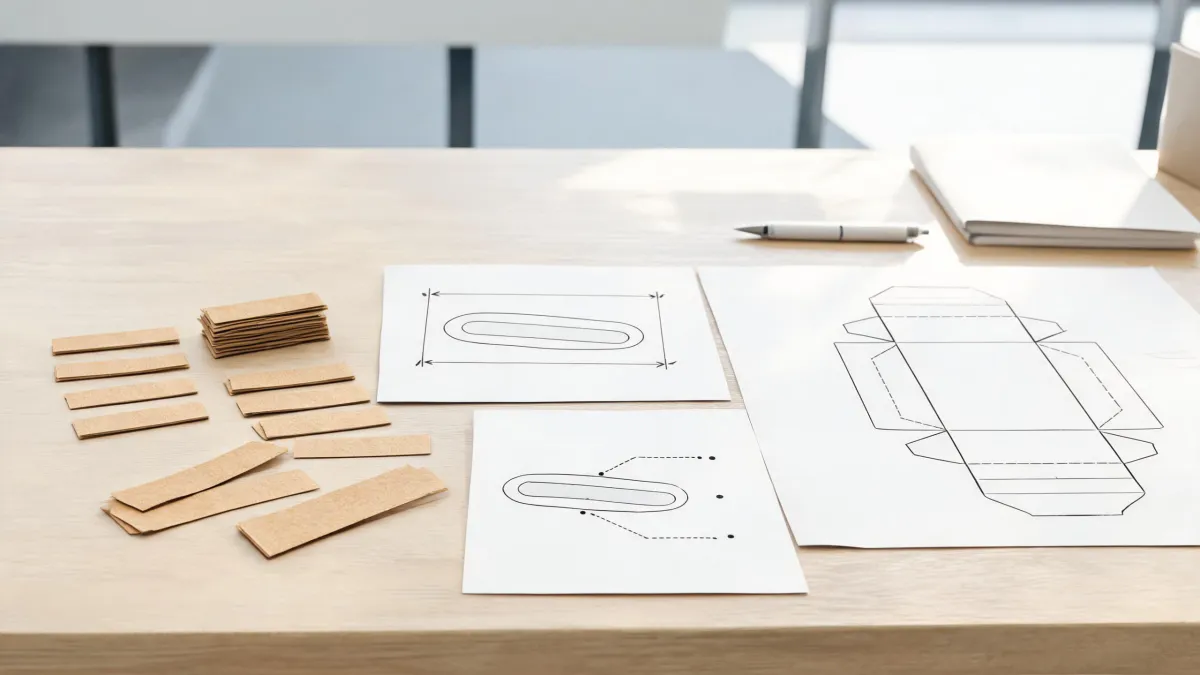
Magnetic nasal strips are not a sleep apnea assessment. Within the Intake Bands and Tabs scope, the manufacturer's own warning sends suspected apnea to a physician, and NIH guidance says a sleep study may be part of diagnosis.
That leaves the strip with a much narrower job. It can change how the nose feels at night: adhesive tension, pressure where the ends meet your cheeks, whether a format stays put when you roll over. It cannot tell you whether your breathing stops, how often, or for how long. Those are the questions a sleep study is built around.
Magnetic Nasal Strips Are Not an Apnea Test
Nasal airflow comfort and apnea assessment get merged in product listings, and they should be pulled apart. A strip sits on the outside of the nose and changes what you feel locally, at the nostrils and across the skin. Apnea is an event that happens deeper in, while you are asleep, and finding it means watching breathing, oxygen, and sleep stage across a night. Feeling more air at the nostrils is a sensation. That is not a measurement of anything happening in your throat.
There is a reason the two get confused. Both involve air, both show up at night, and both get judged by how the night felt. A strip changes the front door; apnea happens when the airway behind it relaxes and closes. Nobody feels that closure directly, which is why the sensation of easier airflow and the presence of apnea can sit in the same person at the same time without either one settling the other.
The Intake warning draws that line without hedging. Sleep apnea is a serious medical condition requiring accurate diagnosis and proper therapy, and anyone who suspects it is told to consult a physician. The sentence exists because people buy strips hoping to fix snoring. The manufacturer is stating plainly that diagnosis is not the product's job.
One boundary on the evidence itself: that warning belongs to Intake Bands and Tabs and to the current version of that help page. It does not travel to other strips, other formats, or other markets, and I am not stretching it there. What holds generally is the shape of the problem. Comfort is something a wearer can judge. Apnea is something a clinician has to test for.
What Snoring and Gasping Actually Signal
The symptom list is short and specific: breathing that starts and stops, frequent loud snoring that is more common in men, and gasping for air. Read those as reasons to open a conversation with a provider, not as endpoints you test at home with a strip.
Each one describes something you cannot observe yourself. Breathing that starts and stops is an event you were unconscious for. Gasping is your body rousing you enough to reopen the airway, which is why people remember the gasp and not the pause before it. Loud snoring most nights is a sound, not a diagnosis, and the two do not line up neatly: plenty of loud snorers have no apnea, and plenty of people with apnea do not snore loudly. That mismatch is exactly why the list points at a clinician instead of a product page.
A bed partner's description is worth carrying to an appointment. The NIH wording backs that move: talk to your healthcare provider about your symptoms, and you may need a sleep study to help diagnose the condition. Using the same description as a reason to skip the appointment is the failure mode. A secondhand report of pauses is a question for a clinician, not a prompt to buy a different strip format.
A Fair Wear Test for Fit Only
Suppose I bought two formats from the same line and gave each one three nights, scoring only what I could actually feel: did the adhesive hold until morning, did the ends press into my cheeks when I lay on my left side, did the airflow feel easier through one than the other. I would write it down the following morning, not in bed, because at night I am a poor observer of my own face.
Nothing but comfort was measured here.
That is the entire protocol. No sensors, no partner log, no claims about my breathing. Compared with a sleep study, my version is quick and tells me close to nothing about apnea, which is the point of keeping the two separate. Both kinds of information exist for a reason and they answer different questions. A strip trial answers which one I want to wear again.
Comfort only, not a diagnosis test.
Side pressure is where formats separate for me. Lying on my right side, one style pressed less than the other against the pillow side of my cheek, and the difference showed up by the third morning as a red mark that was still there the next day. Unlike a lab night, nobody is watching oxygen or scoring events, so the only honest output is a preference with a reason attached.
A fair test also needs a decision, made in advance, about what counts as failure. For me that means the strip comes off during the night, the adhesive gives way, or a mark is still visible the following afternoon. Fixing those conditions before the first night stops me from explaining away a bad result after a good sleep.
Why a Home Trial Cannot Rule Out Apnea
A comfortable night produces one data point: you liked it. There is no control arm, no scoring rule, and no output you can hold against anything else. You slept, you noticed the strip less, you woke up. None of that touches the question of whether your airway closed while you were asleep.
The part people skip is the logic of a negative result. Ruling something out takes a measurement capable of detecting it. A fit test cannot detect breathing pauses because nothing in the process watches breathing. A good night therefore cannot clear apnea, cannot put a number on severity, and cannot confirm that a known case is under control. It can do one thing: tell you which format you would rather wear again.
Feeling better is its own trap. Nasal comfort can change how a night feels without changing what happens in the throat. A mouth that is less dry at breakfast is not a reading of anything. The improvement is real as an experience and empty as evidence, and treating it as a result is how people talk themselves out of a sleep study they needed.
What Would Overturn a Positive Strip Experience
The observations that cancel a comfort-based conclusion are specific. A bed partner reports that your breathing stops and starts. You wake gasping. Loud snoring happens most nights rather than occasionally. A further condition is about intent: if the reason you bought the strip was to settle whether apnea exists, the comfort finding never applied in the first place.
Any one of those moves the question out of product territory. Suspected apnea is a physician conversation, and diagnosis may take a sleep study, which is what both sources say in different words. Once those signals are on the table, a strip result does not get a vote.
The product side can flip too, on its own terms. If the adhesive lets go before morning or the edges leave marks, your fit conclusion is wrong for that format and you try another or stop. That is a comfort finding about a piece of tape and nothing at all about your airway.
Who Should Skip Magnetic Strips for Apnea
Skip the strip if you are buying it to find out whether you have apnea, or to check whether a known case is controlled. It cannot answer either question, and a quiet night will only make a wrong conclusion feel solid. If you have already raised snoring, gasping, or pauses with a clinician and you simply want to compare fit and comfort across formats, a strip is a reasonable limited trial: buy one, wear it a few nights, keep the result labeled comfort, and leave it at that.
