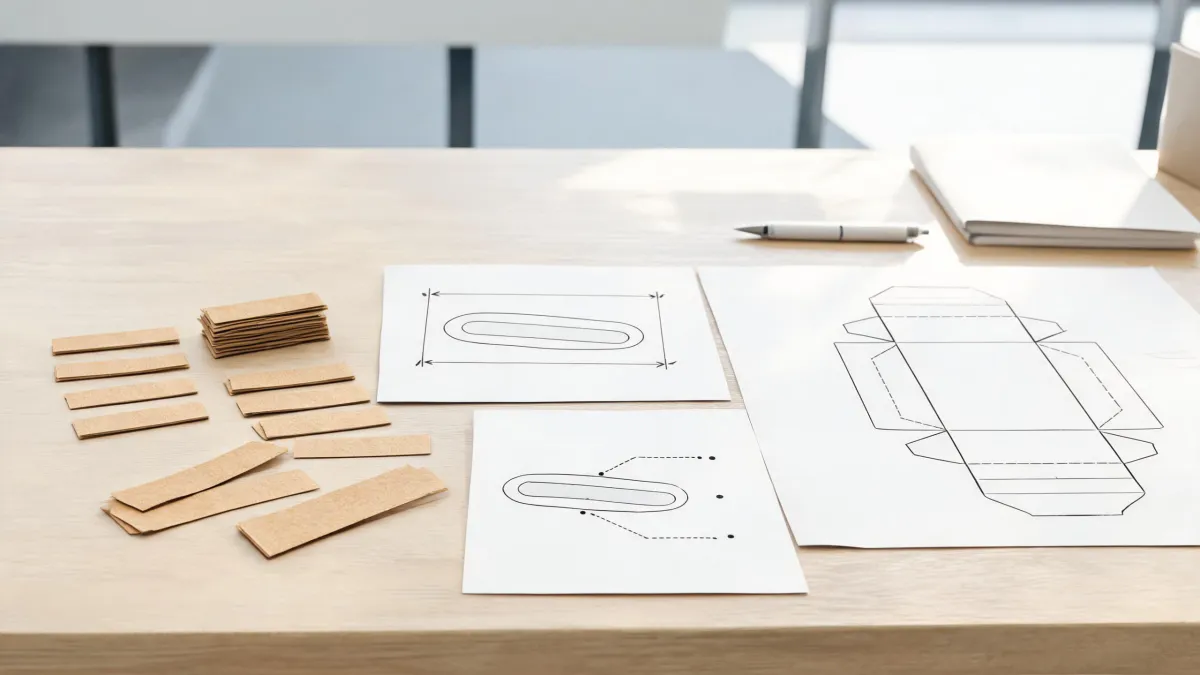
Which Intake Band size do you order for a nose that is wide across the base and narrow over the bridge? Start with the width across the bottom of your nose, take the closest size on the official Intake size chart, then use nose shape as the check that can overturn that pick before you commit to a second box. That order matters more than any single number: the chart hands you a starting size, and shape is what decides whether it survives contact with an actual nose.
Everything below stays inside one product scope: Intake Bands and Tabs, as described in the manufacturer's own sizing FAQ. Nothing here is a universal nasal-strip sizing rule, and it does not transfer to magnetic nasal strips.
What Intake Band Size Measures
Intake Band Size is measured based on the width of the bottom of your nose. That is the input the chart asks for, and it is a narrower definition than the S/M/L label most buyers are used to: the number describes the base of the nose, not overall face width and not bridge width.
I checked the sizing FAQ before writing anything else, and the first thing I noticed is how little the definition claims. It names the reference point a size is built around; it does not promise a fit. For a buyer that distinction carries a cost, because a wrong size means a second shipment and another wait, with the same mistaken assumption carried into every reorder.
Treat the width number as the anchor and nothing more. Bridge width, how the sides of the nose flare, and where the flare begins all sit outside the measurement definition — which is not an oversight in the chart but the reason the next question exists.
Why Nose Shape Changes the Fit
Two noses can measure the same across the bottom and still not want the same size, because the shape of the nose, as well as the width, may determine which size works best. Shape here is a fit variable — a characteristic that changes the outcome without having its own column in the chart. It is not a second measurement, and there is no formula for turning it into one.
I went looking for a shape table and did not find one. The FAQ sets shape beside width inside the same sentence rather than splitting it into a separate scale, and that placement is the useful part: width narrows the candidates, shape decides which candidate you actually reorder.
The differences a width number flattens are the ones shape covers: a base that is broad but a bridge that narrows quickly, a nose whose flare starts higher or lower along the side, a bottom that is wide through the middle and tight at the edges. None of those override the chart. They tell you which purchases to double-check before you turn one box into a standing order.
Run the Intake Sizing Workflow
The order I follow as a buyer, and the one I would hand to anyone buying for a household, runs in four steps. Read the official Intake Bands and Tabs chart first, keeping the scope label in view while you do it so a size that belongs to another product line does not get read into this one. Take the width across the bottom of your nose and match it to the closest chart size. Hold that choice against the shape caveat and ask whether your nose shape argues for the size above or below. Confirm after the band is on, then decide whether to reorder the same size.
The key point at each step is that you are recording a reason, not just a number. I write down the size and why I picked it — width match, shape recheck, or both — because the second order is where most sizing mistakes get locked in. A buyer who cannot say why they chose a size has no way to correct it later, and a support ticket that says only "wrong size" gives the seller nothing to work with.
Confirmation is the weak link, and the honest version is that Intake's sizing FAQ does not publish a numeric fit test. You are not looking for a score. You are asking whether what you see on the nose agrees with the size you picked, and if it does not, whether the disagreement points at width or at shape. Writing that answer down is the whole check.
Start With the Official Size Chart
The manufacturer's instruction is direct: all users should start with the size chart and order the size that most closely matches their measurements. Closest is the operative word. It builds in the fact that a chart size covers a range rather than a single point, and it keeps the decision anchored to a measurement instead of a guess.
My preference on a first order — a preference, not a rule — is to buy the chart-closest size instead of jumping to a neighbor because your shape feels like it belongs there. Shape earns a recheck, not a replacement. If the shape reading and the chart pull in different directions, write down both candidate sizes with the reason each one appealed, then let the chart break the tie.
The cost logic behind that preference is ordinary purchasing arithmetic. One well-chosen first order teaches you more than two speculative sizes, and it keeps the reorder path clean. The preference is also cheap to abandon: it costs nothing to override it on the second order once you have seen how the first size actually sat.
Confirm the Chart Size Against Your Nose
Suppose you order the closest chart size and the band does not sit the way you expected. Three observations are worth writing down. The band sits visibly off-center rather than following the line of the nose. One edge closes while the other leaves an obvious gap. The shape caveat turns out to describe your nose better than the width match does.
Any one of those is a reason to revisit the size or to ask the seller before ordering again. None of them is a diagnosis, and I would not read an off-center band as anything beyond a sizing signal. I looked for a published threshold — a number, a reading, a pass or fail line — and found none in the sizing material, so inventing a cut-off would be worse than working without one.
What you can do without inventing anything is keep the observations specific: where the band sits, which edge closes, whether the same thing happened with the previous size. Those notes travel well. They are what a seller needs in order to answer a sizing question, and they are what stops the same wrong order from being placed twice.
Where This Sizing Advice Stops
The guidance covered here belongs to Intake Bands and Tabs, in the version the manufacturer publishes now. Magnetic nasal strips sit outside that scope. The width-and-shape reasoning above does not carry across the category line, and applying it to another product's band or strip without that product's own chart would be a guess dressed up as method.
That boundary has a cost. There is no universal answer to what size nasal strip a person wears, and anyone offering one across brands is guessing on your behalf. The tradeoff is worth taking, because a scoped answer you can check against an actual chart beats a confident number with no chart behind it.
The practical version for a buyer is to check the scope before applying anything you have read, and to check the version too: a sizing page can be revised, so the chart you read today is the one to compare against, not a screenshot from last year.
So back to the wide-base, narrow-bridge nose: order the chart-closest Intake Band size first, keep the reason you chose it, and let the shape check decide whether that box becomes your regular size or a one-off you exchange.
